01
Pull out the ones you actually wear
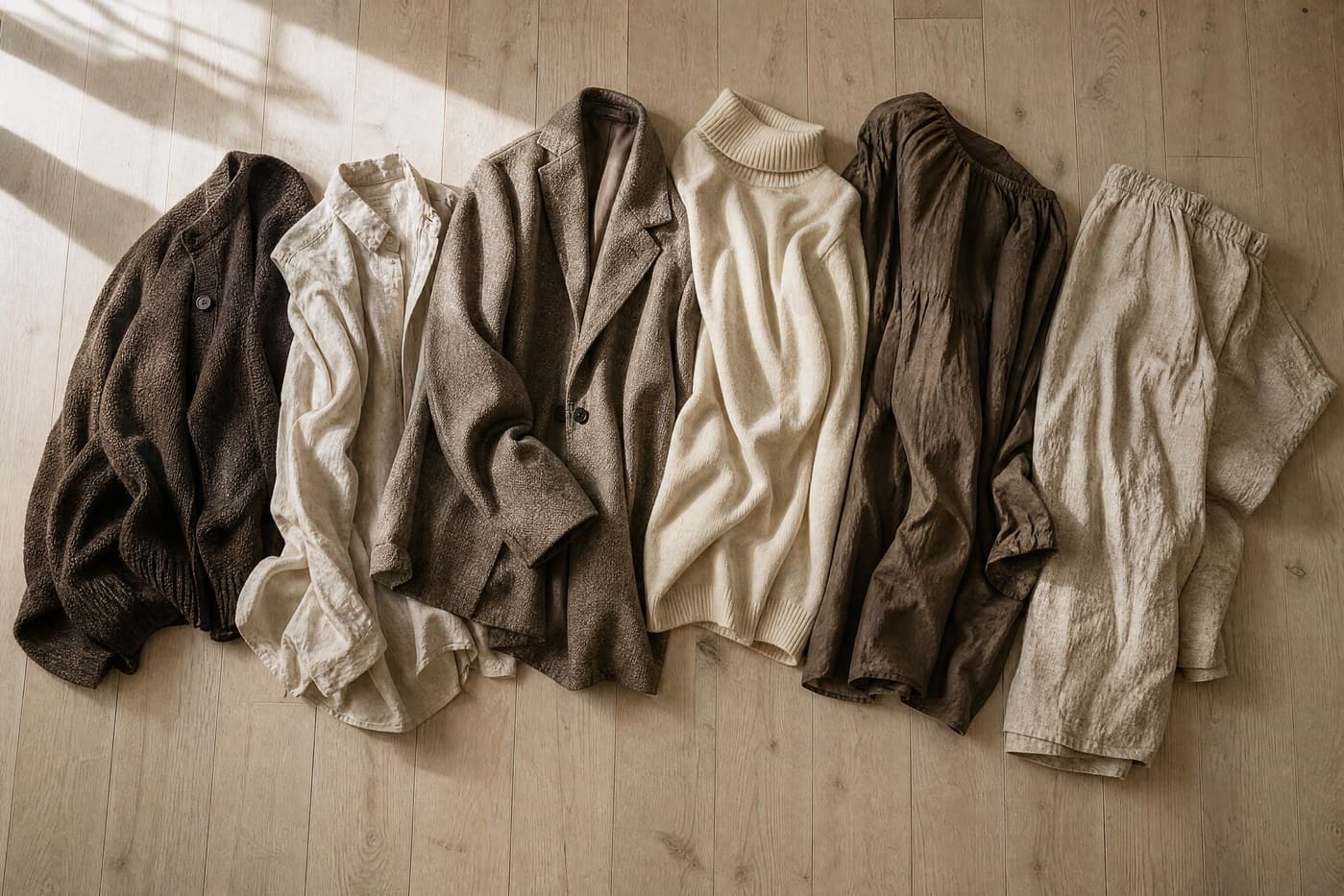
Not the ones you like the idea of owning. The ones that end up on the chair. Six is enough to run the method; more is what makes the reading hold.
001Structural extraction
Almost nobody can say what their most-worn garments have in common. Photograph them, and this measures the common ground — in centimetres.
No account needed to read the worked set below. Free plan covers six garments.
 01
01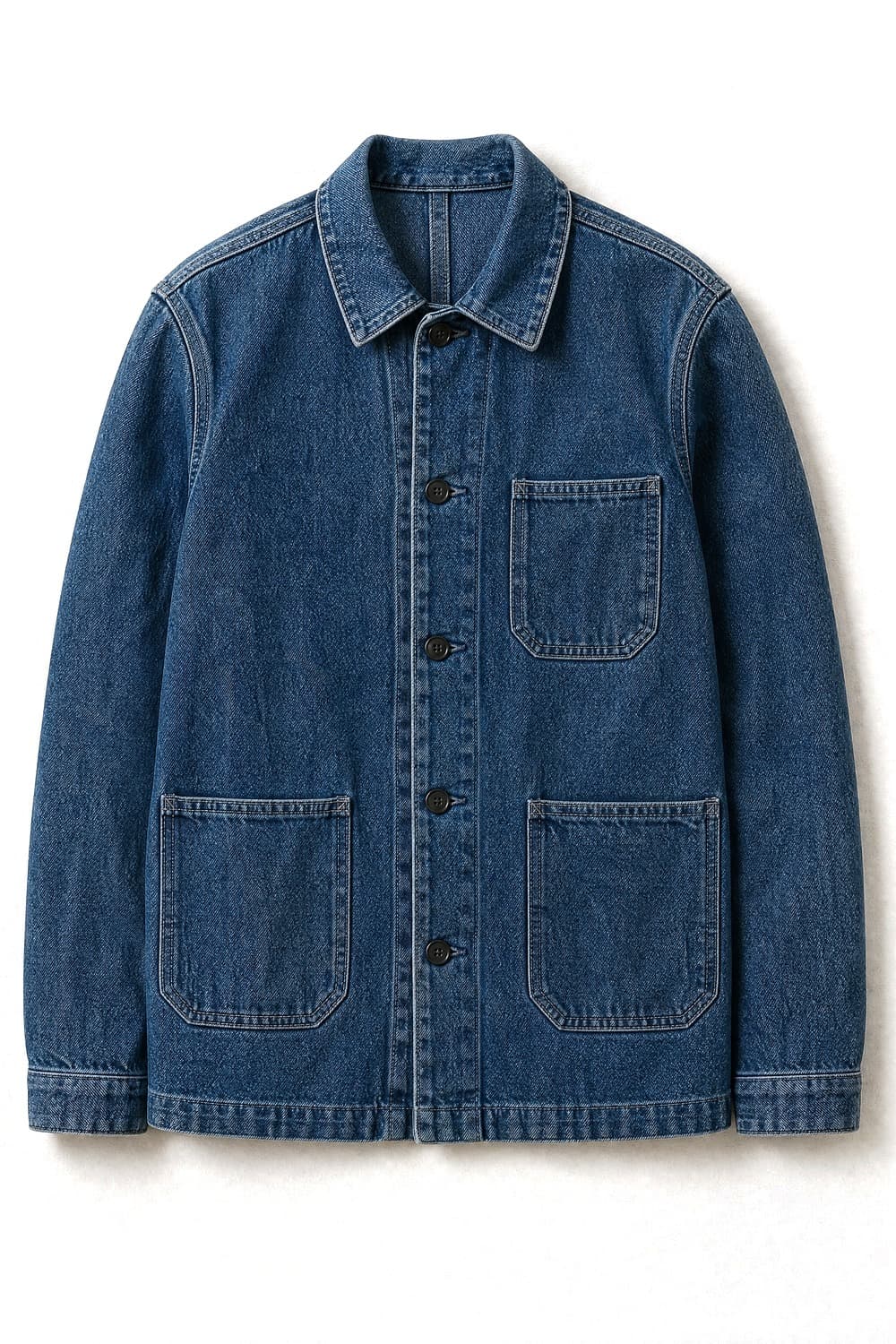 02
02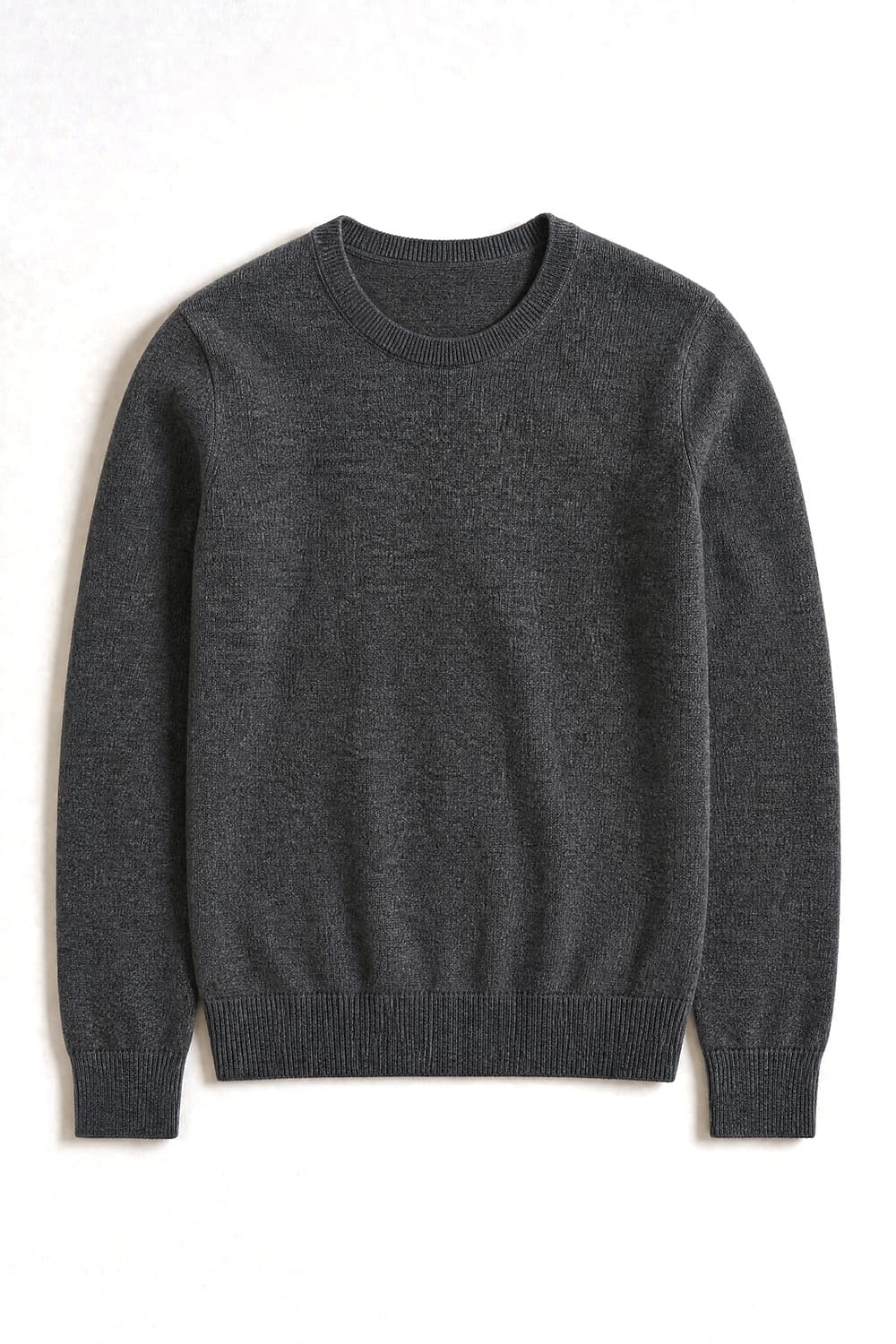 03
03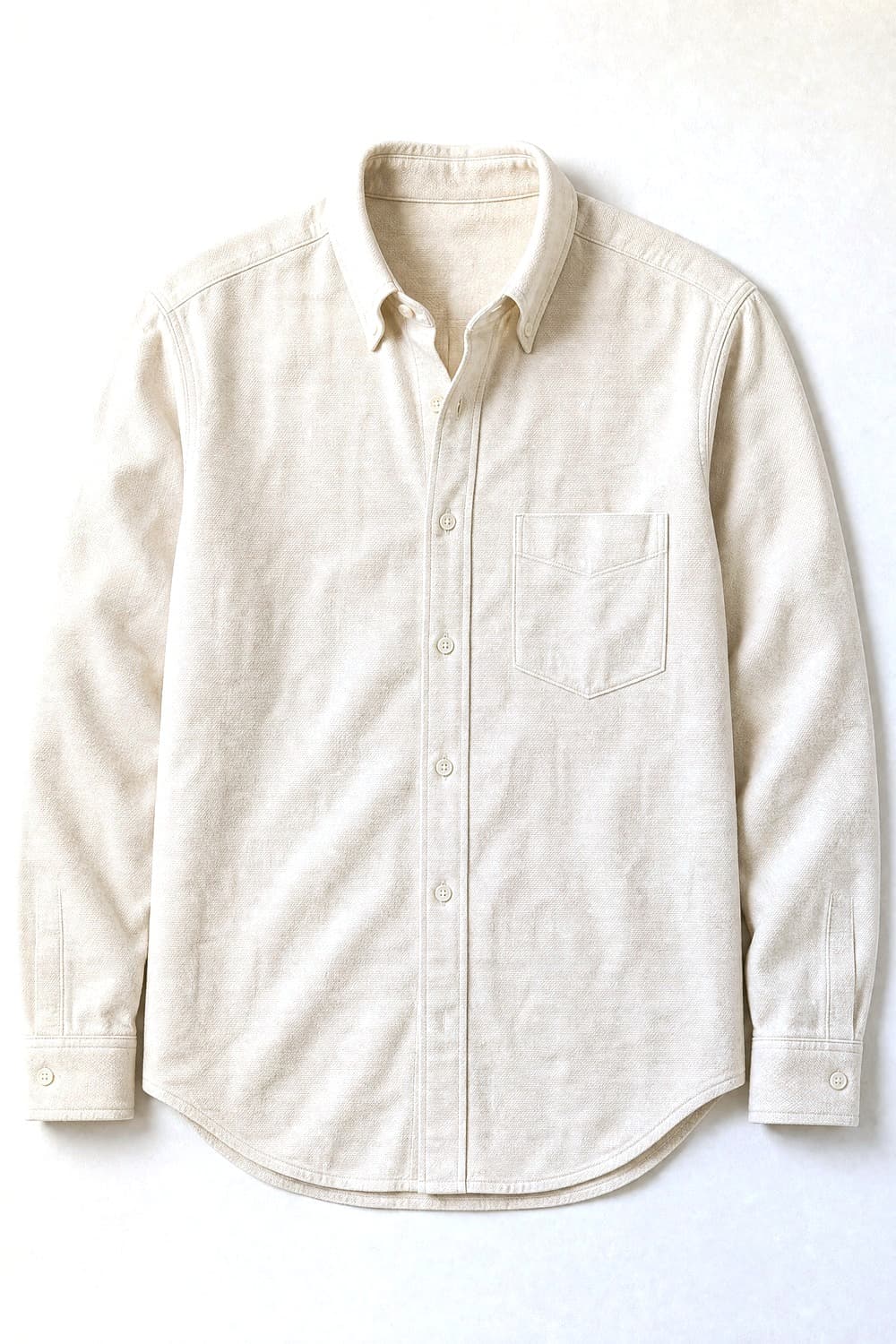 04
04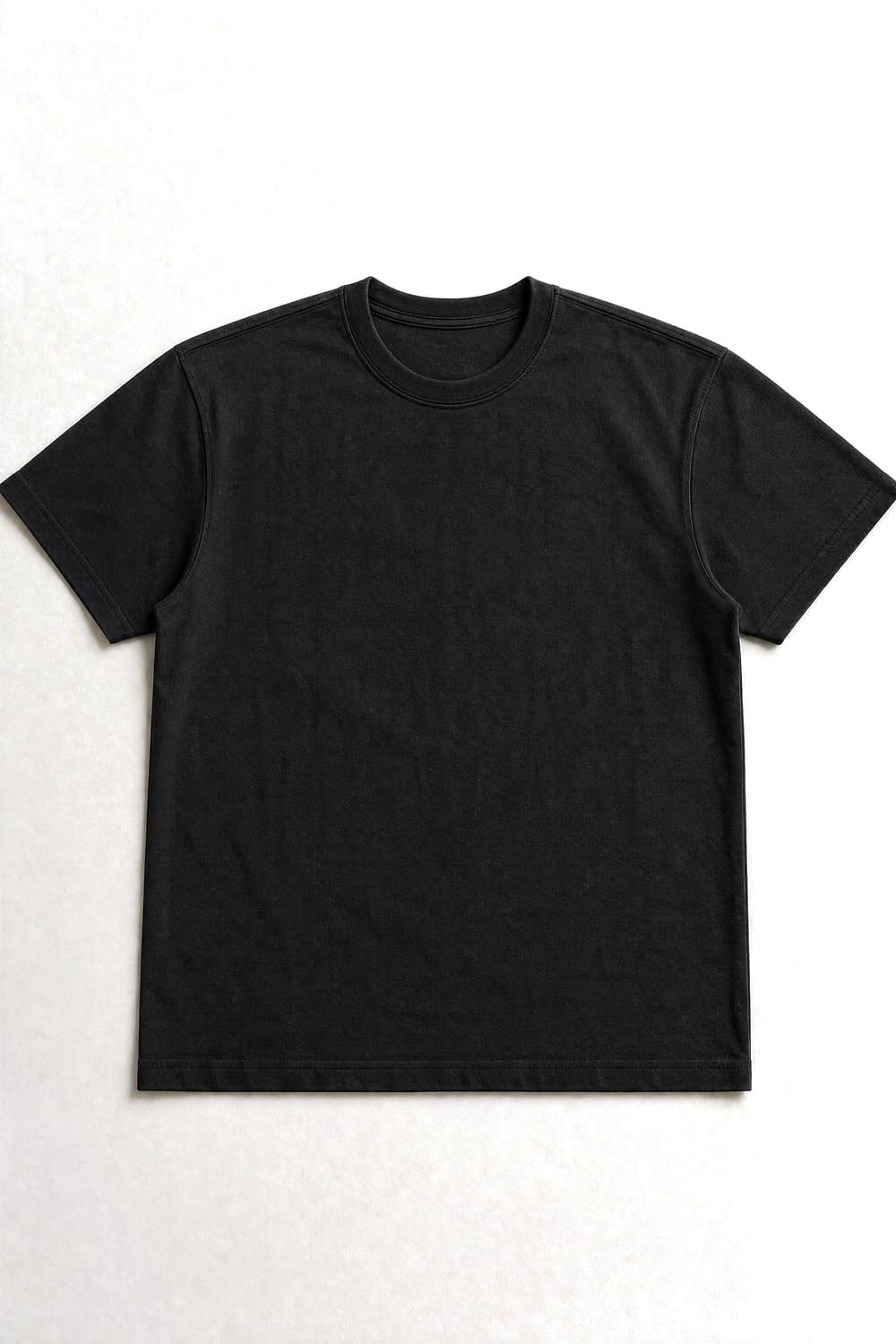 05
05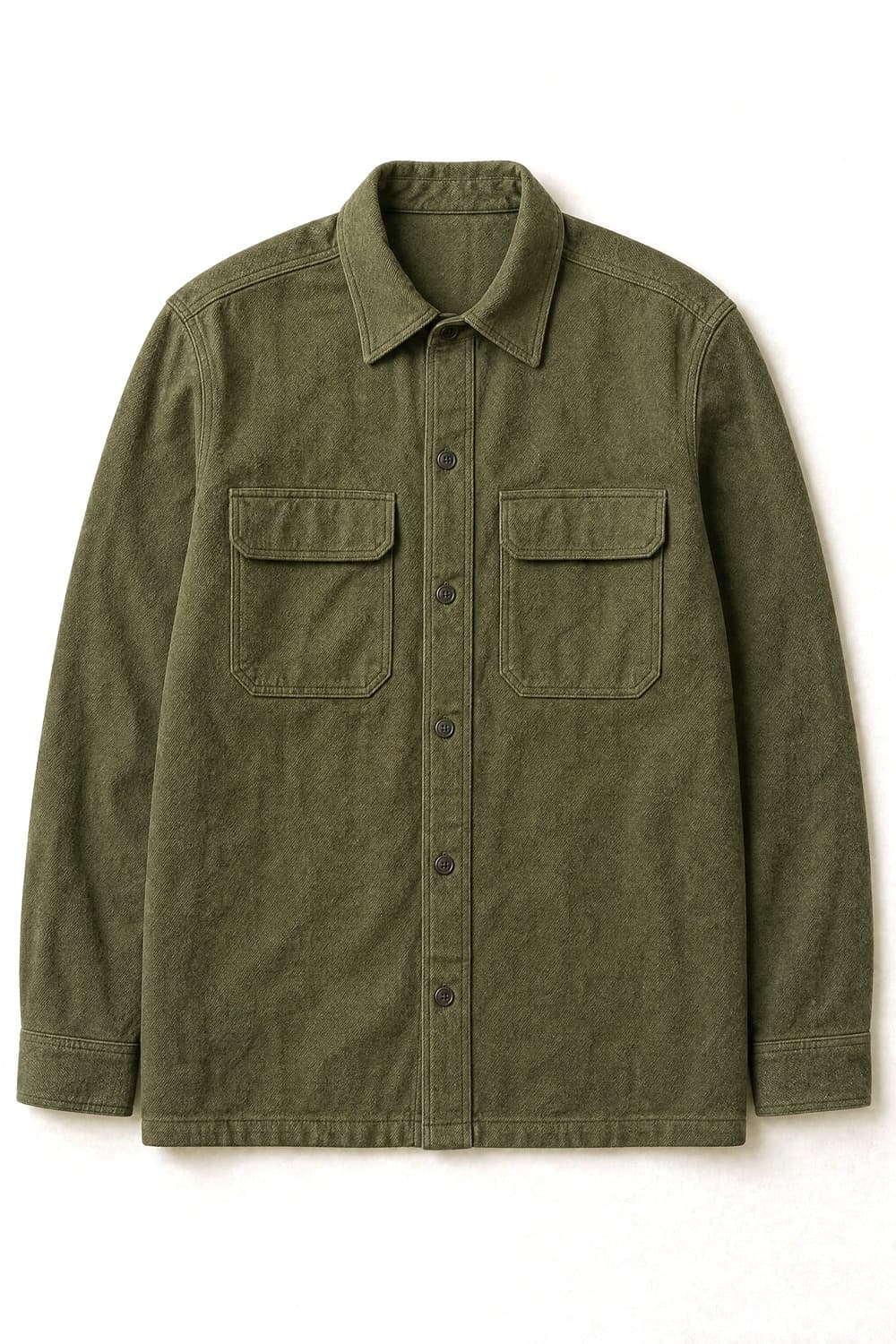 06
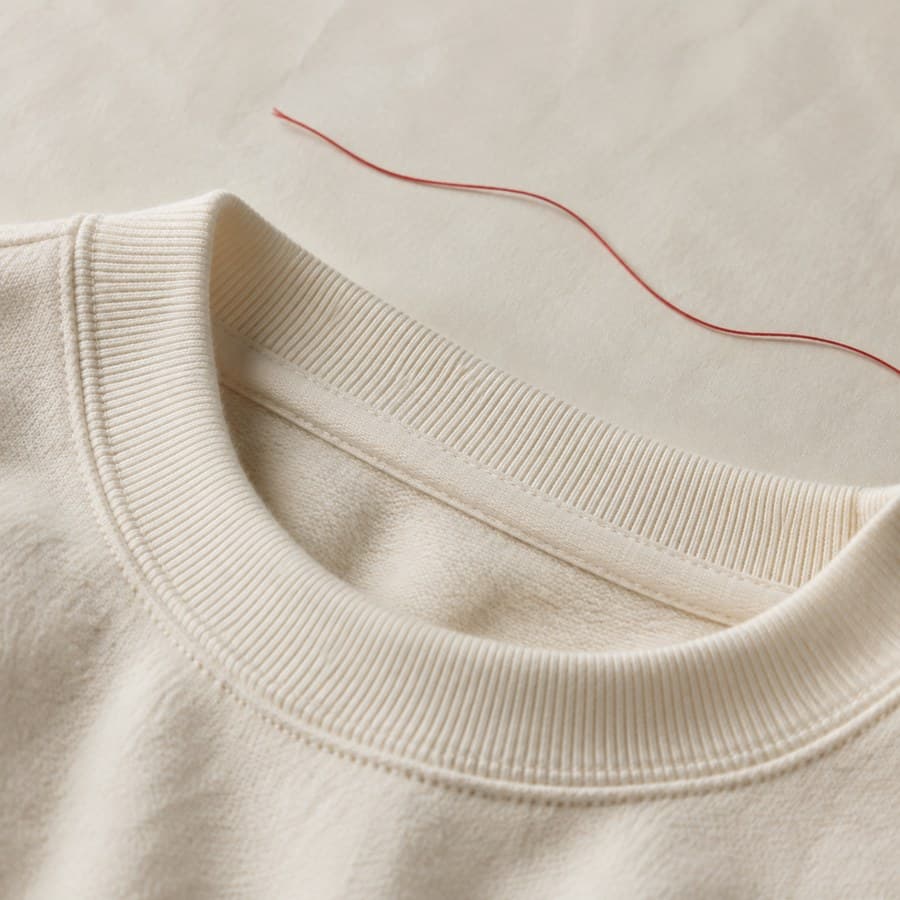
06Neckline drop7–8.5 cm
At centre front, between the shoulder line and the lowest point of the opening.
| Garment | Neckline drop (cm) |
|---|---|
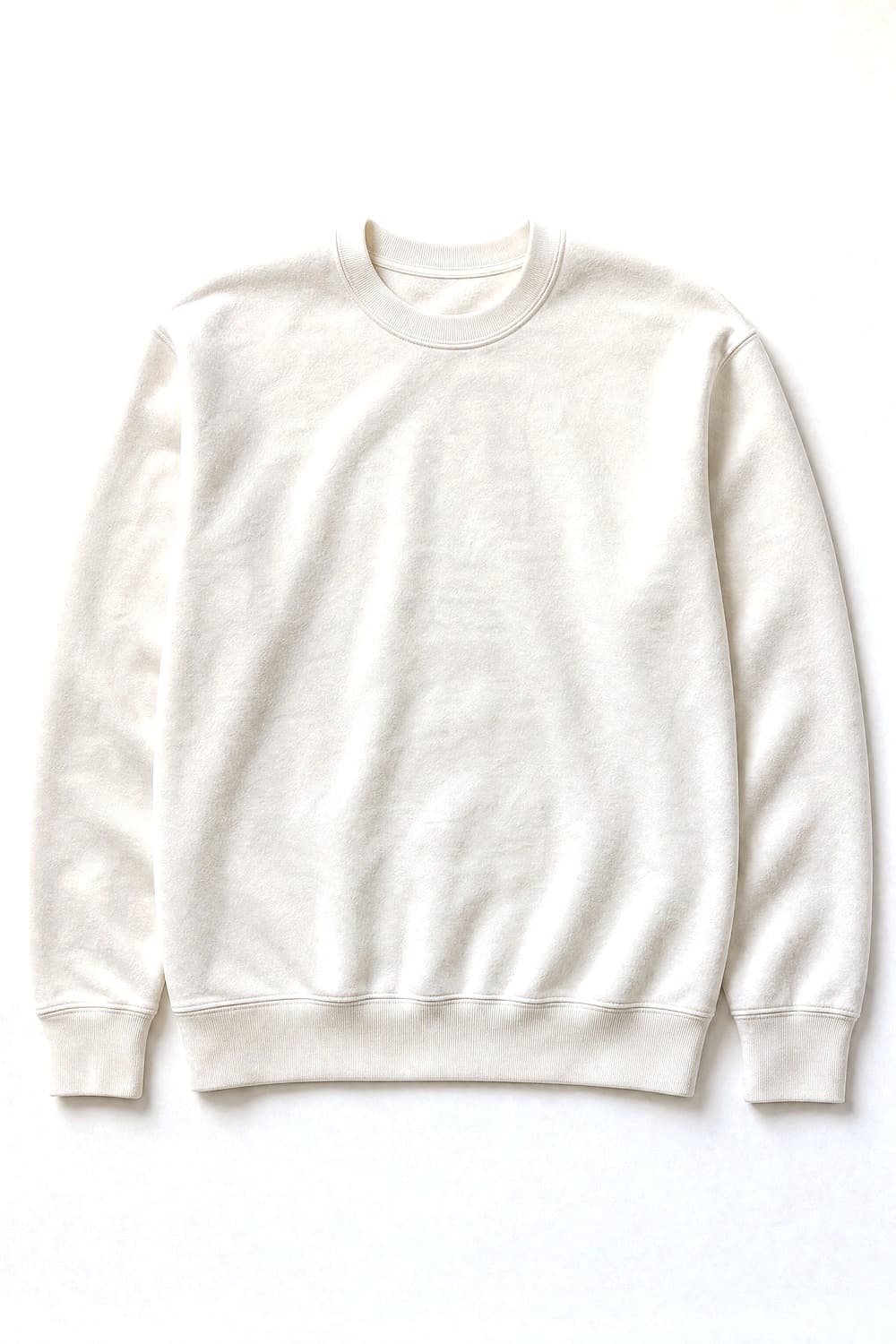
| Heavyweight crewneck, ribbed collar and cuffs | 7.5 |
| Four-pocket jacket, buttoned placket | 8.0 |
| Fine-gauge crewneck, set-in sleeve | 7.0 |
| Button-down collar, curved hem | 8.5 |
| Boxy short-sleeve, straight hem | 7.5 |
| Two-pocket overshirt, straight hem | 8.0 |
Worked set, six garments. Every rule and every figure on this drawing is placed by the page from measured values — nothing in the image is generated text.
002What the six have in common
Every trait below carries the place on the plate where it can be seen, and the number of garments it actually holds for. When it holds for five of six, it says five of six — the garment it fails on goes quiet on the left.
7.5
8.0
7.0
8.5
7.5
8.0
Visible atCentre front, between the shoulder line and the lowest point of the opening.
The six openings differ by less than the width of a thumb. Nothing else about these garments is that tightly grouped — the knit and the oxford shirt agree on this one figure while disagreeing on everything else.
Where it is visibleCentre front, between the shoulder line and the lowest point of the opening.
Five garments are cut with a hand's width of surplus across the chest. The merino knit is the exception at 8 cm — and it is also the only one of the six that is worn under something else.
Where it is visibleTwo centimetres below the armhole, side seam to side seam.
The spread is wide, but the floor is hard: not one of the six ends above the natural waist. That is a constraint, not a preference — and it is the kind of thing that is invisible until six garments are laid out at once.
Where it is visibleThe lowest edge of the garment. Curved hems read at their lowest point.
Sleeve length is reported as a ratio against body length so it survives a change of size. Five of the six land in a six-hundredths band. The short-sleeve piece sits at 0.34 and is not folded into the cluster.
Where it is visibleThe cuff edge, read against the hem of the same garment.
Weight is read from how the cloth folds where the sleeve crosses the body: heavy cloth holds an open fold, light cloth collapses into a crease. The oxford shirt at roughly 150 gsm is the one that collapses.
Where it is visibleThe fold where the sleeve crosses the body on a flat plate.
003How a set is built
01
Not the ones you like the idea of owning. The ones that end up on the chair. Six is enough to run the method; more is what makes the reading hold.
02
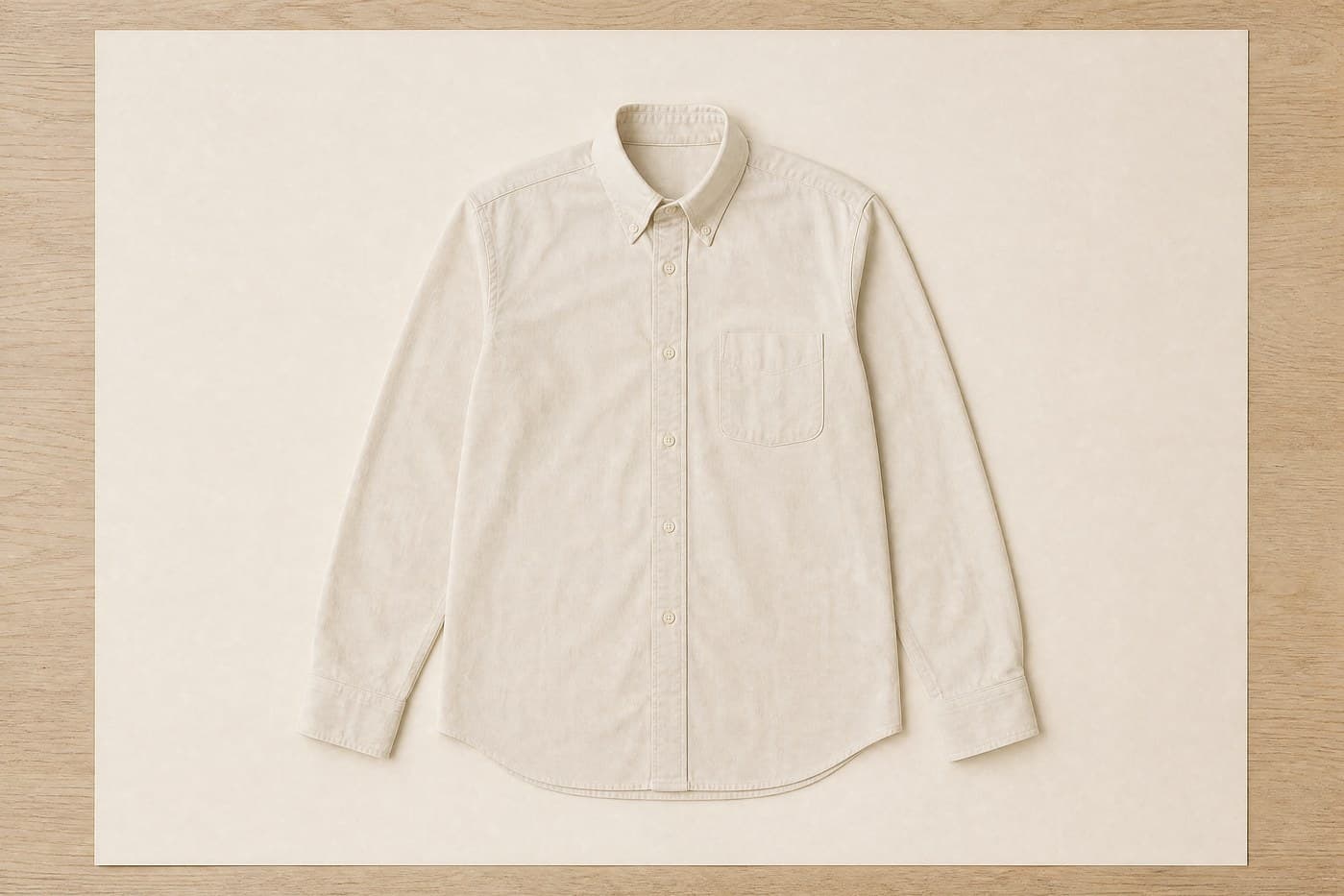
Shoulders level, sleeves straight, camera square on. Images that appear to contain a person are refused at upload — a worn garment measures the body inside it.
03
Five traits with their positions marked on every plate, the count of garments each one holds for, and an explicit list of what six garments cannot settle.
004What comes out
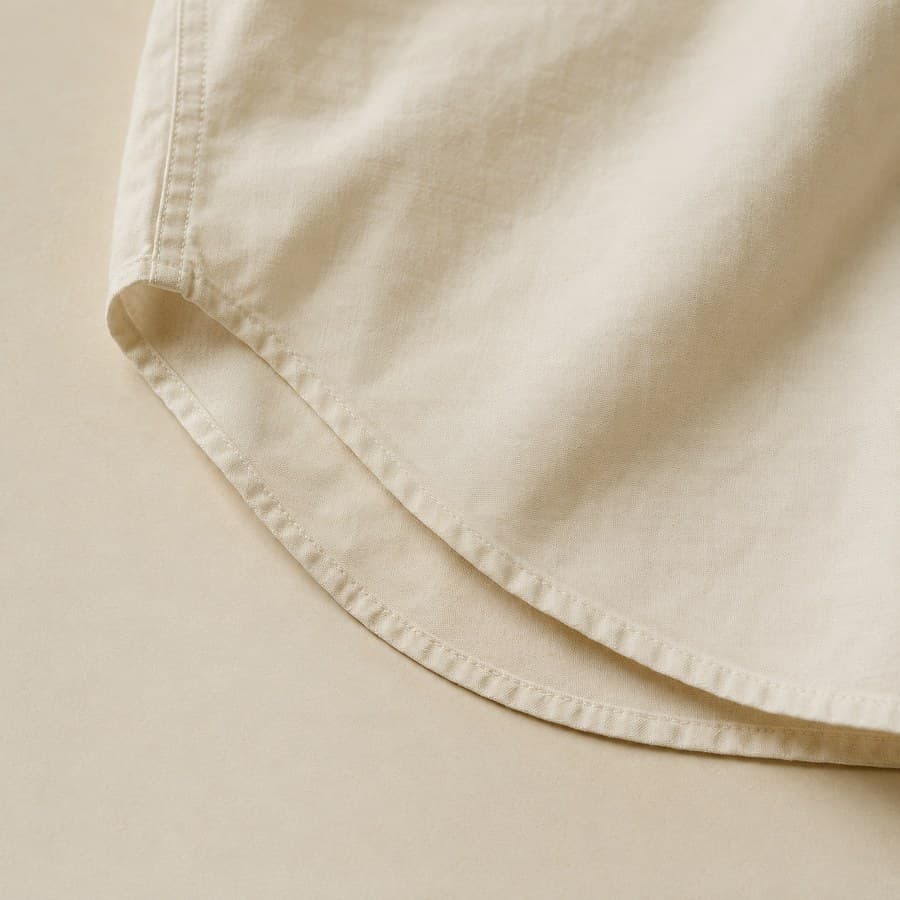
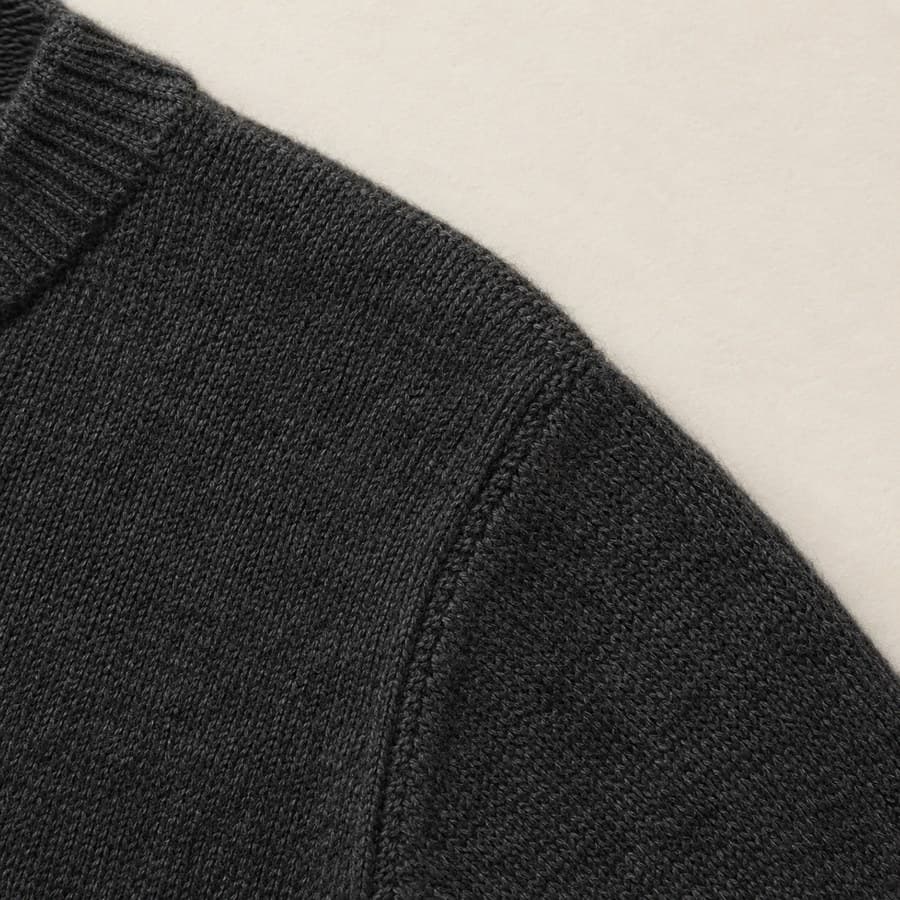
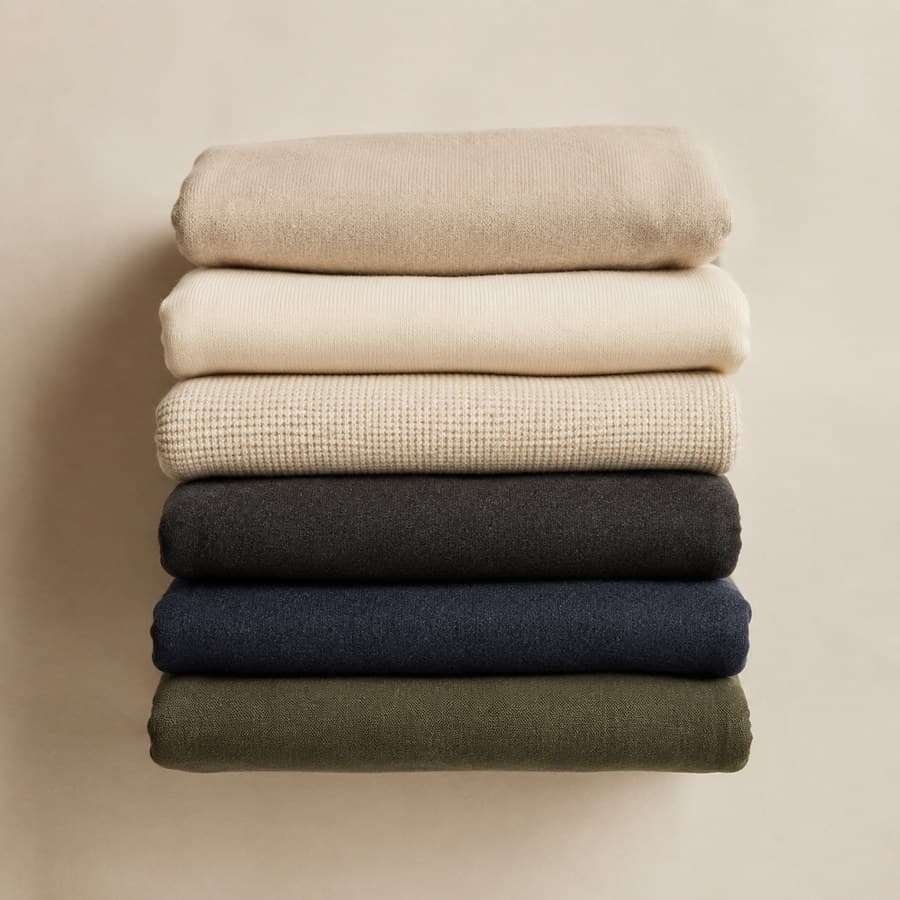
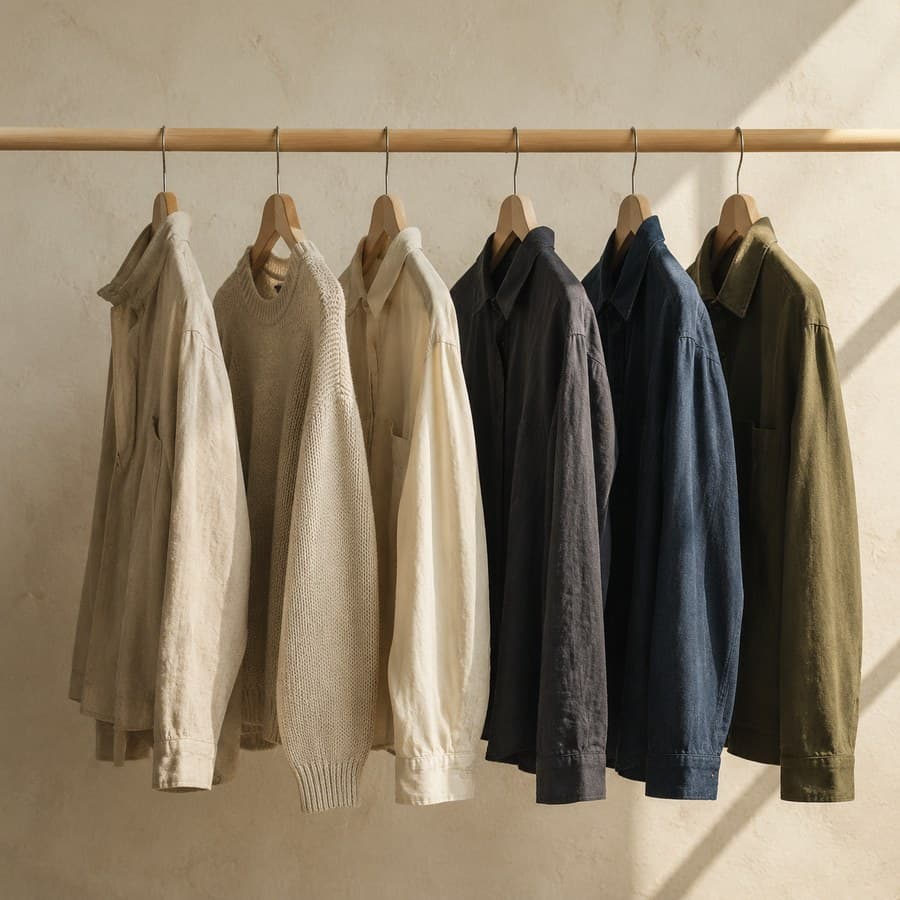
The plate puts the garments side by side with each trait marked at the same structural point on all of them. The standard card turns those marks into a handful of lines to check the next time something is about to be bought — a standard, not a list of things to buy.
Rendered as live text on this page, not as pixels. Every figure here comes from the measurements above and can be traced back to a garment.
005 Where it stops
Every set returns the things the sample is too small to support. That list is required to be non-empty. A tool that only ever returns confident findings is not measuring anything.
Six garments cannot separate “these necklines are chosen” from “these necklines are what the wardrobe happens to hold”. The reading is real; the cause is not established.
Cloth weight is inferred from drape in a single photograph, not read off a scale. Treat every gsm figure as a band of roughly ±40, not as a number.
One short-sleeved piece breaks the sleeve cluster. With six items, a single exception is neither a pattern nor noise — it is undetermined, and it is left undetermined.
Colour is not counted. Five of the six are neutral, but garments that photograph easily are over-represented in any set a person chooses themselves.
No verdict on the way you dress, no category, no season, no body classification, no label about who you are. Every result carries one fixed sentence:
This is a description of six garments, not a description of you.
No product suggestions, no brand names, no shop links, no affiliate arrangements. A measurement that is paid for by a seller is not a measurement, and neutrality is the only reason a standard written here is worth carrying into a shop.
Read the full position in the avertissement IA.
006Plans
The free tier stops at six garments. Six is enough to run the method end to end and get a first reading. It is not enough to know whether that reading is a pattern or a coincidence. The common trait of six garments can be chance; the common trait of fifteen is a shape. Paid removes the item limit, which is the only thing that makes the second reading worth more than the first.
$0 USD
No card required.
Enough to run one set end to end and see whether the reading holds.
50 credits / month · Up to 6 garments in a set
$10 USD/ month
All taxes included. Or $96 USD billed yearly.
For putting the whole rotation in, not a sample of it.
430 credits / month · Unlimited garments in a set
$29 USD/ month
All taxes included. Or $278 USD billed yearly.
For separate archives per category, read against each other over time.
1650 credits / month · Unlimited garments, multiple archives
Prices are in USD and include all applicable taxes. Subscriptions renew automatically until cancelled; cancelling takes one control in the workspace and stops the next renewal. Allowance does not carry over and cannot be exchanged for money.
Compare the three plans007Questions
Still unanswered
Write to support@zeshabitues.com or call +33 6 55 24 64 02. Monday to Friday, 09:00–18:00 CET.
No. Nothing here is scored, typed, ranked or matched to a category, and the output contains no adjective about the person who owns the garments. What comes back is five measurements taken from cloth — neckline drop, chest ease, sleeve ratio, hem position and cloth weight — with the place on each photograph where you can check them yourself.
The result page carries one fixed sentence, and it is the whole position of this tool: This is a description of six garments, not a description of you.
No. There are no product suggestions, no brand names, no links to shops and no affiliate arrangements of any kind anywhere in this service.
That is not modesty, it is the condition that makes the reading worth anything. The moment a measurement tool also earns a commission, every measurement it reports becomes negotiable. What you get instead is a standard written in centimetres, which you can carry into any shop, or none.
Photographs of your own clothes are domestic images, and they are treated that way. They are stored to run your extraction and to let you re-open a set later. They are never used to train any model, never sold, and never shared with a third party for their own purposes.
You can delete an individual plate or an entire set from the workspace at any time; deletion removes the file from storage within 30 days including backups. Full detail, and your right to complain to the CNIL, is in the politique de confidentialité.
Lengths and ratios read from a flat, square-on photograph are reliable to roughly a centimetre. Cloth weight is inferred from how the fabric folds and is reported as a band of about ±40 gsm, never as an exact figure.
Every set also returns a list of what the sample is too small to support. That list is required to be non-empty, because six garments genuinely cannot settle most questions worth asking. See the avertissement IA.
As a consumer you have 14 days to withdraw from a distance contract. Because this is a digital service that starts immediately, that right can be given up — but only if you tick two separate statements at checkout, neither of which is ticked for you. If you do not tick both, the service does not start immediately and your 14 days run in full.
Both statements are repeated in your order confirmation. The procedure and the standard withdrawal form are on droit de rétractation; refunds are described in the terms of sale.
Cancellation is one control in the workspace, on the same screen you subscribed from, and it takes effect at the end of the period you have already paid for. No email, no call, no retention step.
The monthly allowance is a service allowance, not money and not stored value. It cannot be exchanged, transferred or refunded, and it does not carry into the next period. There are no top-up packs — if you need more, the only route is a higher plan.
A garment on a body measures the body. Upload refuses images that appear to contain a person, and the extraction never runs on them.
There is also a practical reason: a flat, square-on plate is the only way six garments can be measured at the same point and compared honestly. Anything else compares postures.
Anyone aged 18 or over, anywhere. The interface is in English; the contractual documents are in French, which is the law of the contract.
The service must not be used for medical, legal, financial, safety, employment, credit, housing or judicial decisions. Those limits are set out in the avertissement IA and the conditions générales d'utilisation.
Six garments, six photographs, five measurements each. The free plan covers exactly that, and no card is asked for.